

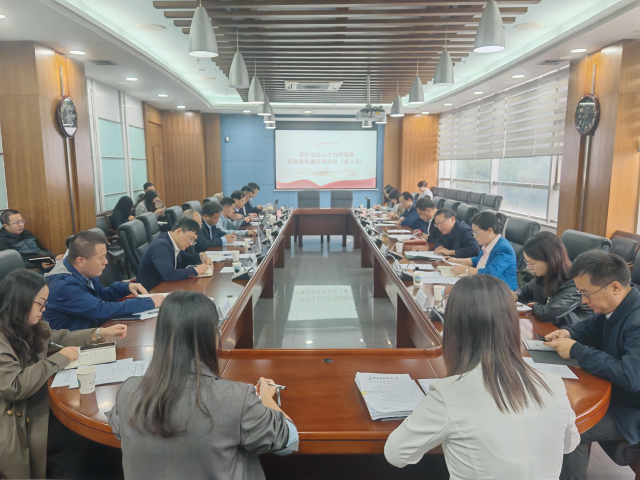
On the morning of October 17, the10th Progress Meeting on the Collaborative Innovation Base for Foreign-Related Legal Talent was held in the conference room on the third floor of Zhongyuan Building. The meeting focused on the phased progress of the base construction, systematically summarized the achievements in the first half year of 2025, and scientifically outlined key tasks for the next stage, striving to advance the base construction from “initial breakthroughs” to “deepened quality enhancement”. In attendance were Hou Zhenfa, Secretary of the Party Committee of ZUEL; Qin Hong, Member of the Standing Committee of the CPC ZUEL Committee and Vice President; and Liu Renshan, Member of the Standing Committee of the CPC ZUEL Committee and Vice President. The meeting was chaired by Qin Hong, Participants included representatives from the Party Committee Office, University Administration Office, Supervision Office, Graduate School, Communist Youth League Committee, Discipline Construction Office,Administration, International Exchange Department, International Education College, and other relevant departments, as well as deans of various divisions under the Faculty of Law, Yao Peipei—the advisor for the second cohort of theBase’sInnovationClass—and related staff members.

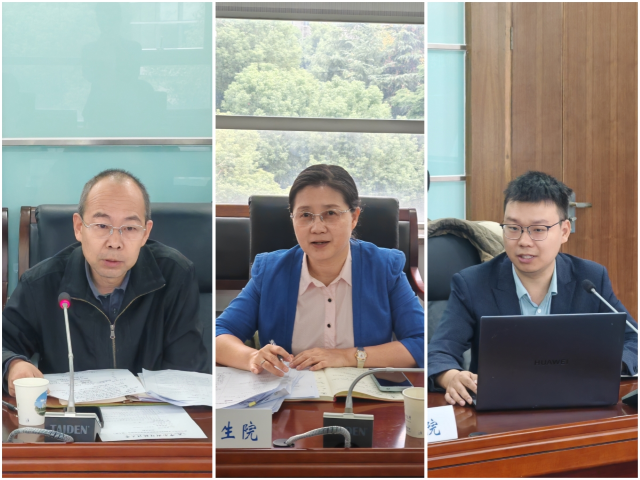
At the meeting, Liu Renshan, Member of the Standing Committee of the CPC ZUEL and Vice President, in accordance with the requirements of relevant documents from the Ministry of Education, put forward comments and suggestions emphasizing the “Four-izations” for the base construction—first, adhere to “Professionalization”, focusing on introducing and cultivating foreign-related legal faculty with solid background in international law knowledge. Second, promote “Quantification”, leveraging artificial intelligence technology to empower base construction and talent cultivation, thereby enhancing data capture and analysis capabilities. Third, emphasize “Qualification”, ensuring that the entire process of base construction aligns with the higher-level development requirements for connotative (quality-focused, efficiency-driven, and potential-oriented) and process-oriented evaluation. Fourth, achieve “Regularization”, standardizing the monthly, quarterly, and annual reporting system for base construction, and integrating the development work into daily practices to establish long-term mechanisms.

Hu Honghong, Dean of the Graduate School, delivered a systematic report on the Base’s work progress during the first half of 2025 and outlined key plans for the next phase. She noted that the Base has established long-term and stable collaborations with international organizations including the International Institute for the Unification of Private Law (UNIDROIT), the World Intellectual Property Organization (WIPO), and the Asia-Pacific Space Cooperation Organization (APSCO). It has pioneered a four-pronged educational model integrating classroom instruction, joint training programs, practical internships, and participation in global governance, achieving phased achievements.To further enhance the alignment of talent cultivation with national strategic needs, the university will continue to focus on three core directions: optimizing the training system, deepening practical cooperation, and strengthening talent empowerment. Efforts will be coordinated across multiple dimensions, includingenhancing the quality of the Base’s innovation classes, expanding resources from international organizations, deepening diverse practical cooperation, and enhancing the international competitiveness of faculty and students, to propel the Base's development to newlevel.
Xu Weigong, Dean of the School of International Law, conveyed the key points from the Seventh High-Level Forum on Rule of Law Cooperation among Countries along the Silk Road. These included multiple dimensions for innovating the cultivation of foreign-related legal talents: First, deepening the integration of ideological and political education with practice-oriented approaches to strengthen the value-driven orientation of talent development; Second, improving the university's robust leadership system and clarifying the division of responsibilities among departments to ensure efficient progress; Third, leveraging disciplinary strengths to provide adequate resource support; Fourth, promoting coordinated development to innovate scaled training models featuring customized, targeted, and integrated approaches.
Yao Peipei,the lead instructor of the second cohort of theBase’s Innovation Class,considering the actual situation of the students, expressed expectations for future work and proposed to actively introduce resources of senior foreign experts and outstanding alumni to help students broaden their international horizons and further enhance their practical capabilities in cross-cultural problem-solving.
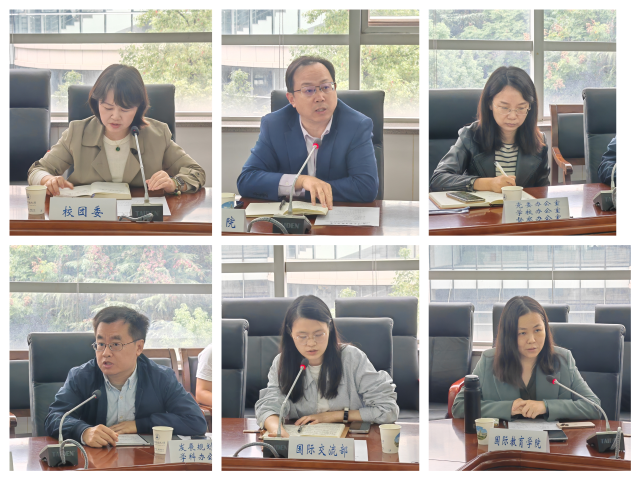
Subsequently, heads of relevant schools and functional departments reported their directions and measures for the next phase in turn and engaged in in-depth discussions on key issues such as faculty teams, student recruitment, and resource allocation.

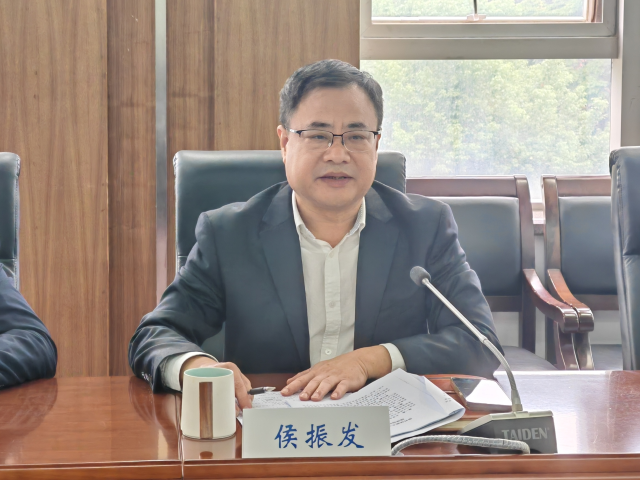
In his concludingremarks,Hou Zhenfa, Secretary of theCPC ZUELParty Committee, expounded on the strategic significance of the base construction from the perspective of serving national strategies.He fully affirmed the preliminary work of all units and put forward three guidelines for realizing the strategic leap from “initial breakthroughs” to “deepened quality enhancement”: Firstly, leveraging the robust leadership system and working mechanisms to build a three-dimensional management system of“top-level design,collaborative linkage, and dynamic evaluation”,ensuring the correct direction and sustained momentum of the construction; Secondly, highlighting the university's distinctive strengths to create a full-chain education mechanism for developing core faculty,courses, textbooks,practical platforms and projects, and further improving the system for cultivating foreign-related legal talents; Thirdly, establishing a fund security mechanism characterized by “diversified investment, precise allocation, and benefit evaluation” to ensure that investments in foreign-related legal talents training are targeted and used efficiently.
In conclusion, Qin Hong, Member of the Standing Committee of the CPC ZUEL Committee and Vice President, delivered specific directives on implementing the spirit of the meeting. Firstly, he emphasized the need to thoroughly prepare for the Base’s annual accreditation and assessment while concurrently developing a digital promotional platform for “International Rule of Law” to expand its influence. Secondly, efforts must be made to effectively cultivate the second cohort of the Base’s Innovation Class and continue implementing the “Academic Mentor + Practical Mentor” dual-track training model. Thirdly, he called for a focus on the challenges in student internships and employment by streamlining information-sharing channels for opportunities in foreign-related organizations. These measures will ensure that the Base’s development forms a closed-loop, synergistic effort in cultivating high-quality, practice-oriented international legal talent, thereby providing solid talent support for the construction of a China under the rule of law.
(END)
Reporter: Liu Jie
Photographer: Zhang Jingyu